
Introduction: An AWS pre-briefing under NDA and the enticing title “What’s next with AWS” roped me into tuning up for the main event on April 28th. And the breadth of the announcements covered all aspects of customer needs, ranging from an expanded OpenAI partnership to the launch of Amazon Quick and the verticalization of Amazon Connect into a four-product agentic AI family. These announcements show AWS pivoting from foundational models to Agentic AI that can be embedded into current organizational business processes. This blog post will briefly cover the announcements made on April 28th.
Moving from Models to Well-Governed Agents
OpenAI was on stage to announce that its latest models are now available on Amazon Bedrock. More than just a new model, this announcement brings all AWS’s enterprise controls, like IAM-based access management and AWS CloudTrail logging. Consolidating AI spend with cloud workload costs will be a strong differentiator for customers seeking better cost visibility.
This announcement moves AWS from a model marketplace to a Bedrock-based control plane for Agentic AI. For customers concerned about data privacy, these capabilities will be a source of new growth revenue for OpenAI.
Bringing AI from the Cloud to the Desktop and Mobile Devices
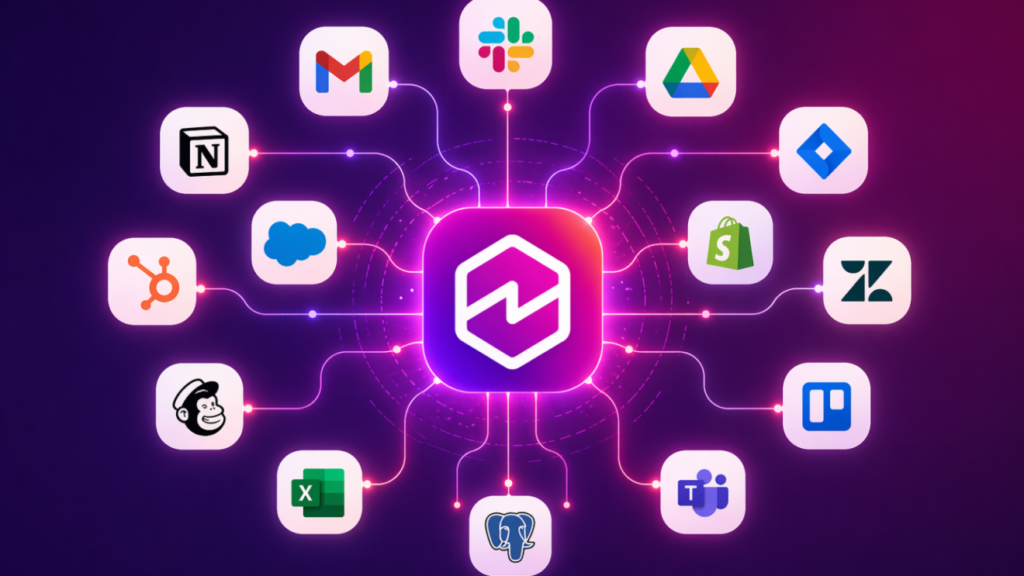
Amazon Quick is designed to work across applications, enterprise tools, and a multitude of data sources (see Figure 1 above). The product is presented as a desktop, web, and mobile AI assistant. While aligned with enterprise data and security policies, Amazon Quick is designed to assist employees with their day-to-day activities, such as creating presentations and automating repetitive tasks. Amazon Quick acts as a no-code platform for building intelligent apps that connect multiple data sources using natural language.
After seeing a demo of Quick from Amazon, one capability that distinguished it from similar products was its personal knowledge graph, which provides contextual understanding of various elements of work. After ingesting data from various sources, the visualization, with node colors and sizes, immediately draws a user’s attention to relevant, actionable insights. Navigating through the graph by clicking on nodes provides a more detailed understanding.
While Amazon Quick can be a game-changer for enterprise productivity, the product will face challenges from SaaS providers that are increasingly making data harder to access. For example, it has been reported that some SaaS companies are moving to block unauthorized AI Agents. AWS could overcome these obstacles by expanding partnerships with SaaS providers and already has more than 80 integrations with leading SaaS products, including SAP, Slack, Teams, Salesforce, and ServiceNow.
Turning Amazon’s Expertise into Products with Connect
The easiest way to explain AI value to customers is to speak and deliver value aligned to a specific domain. With that in mind, AWS rebranded Amazon Connect from a single contact-center product into a family of four agentic AI solutions as follows:
1. Amazon Connect Decisions – supply chain
2. Amazon Connect Talent – high-volume hiring
3. Amazon Connect Customer – customer experience (the original Amazon Connect, rebranded)
4. Amazon Connect Health — healthcare administration (released slightly earlier; now joins the family)
Amazon positioned these products as purpose-built, drawing on decades of experience across its multiple business units. Just as AWS was launched around 2006, this announcement shows how the company is transforming internal playbooks into reusable enterprise assets for customers. The Amazon Connect platform has evolved from a single customer experience solution into a suite of agentic AI solutions for critical business functions.
The Amazon Connect announcement shows how Amazon is differentiating itself from vendors who speak about AI in abstract terms by defining the market in terms of specific business domains with measurable outcomes. This approach will be easily understood by line-of-business executives, who usually define the path of technology spending.
Conclusion: The availability of OpenAI through Amazon Bedrock is important for existing AWS customers, who can now easily add the model for specific use cases. It gives OpenAI an opening with a very large customer base and neutralizes Microsoft’s competitive advantage of its exclusive partnership with OpenAI.
Amazon Quick delivers unique value because it is on the user’s desktop, with web and mobile access. By linking interactions from a few days ago to today’s calendar invitation, Amazon Click addresses the perennial problem of information discovery. Being ecosystem-neutral, Amazon Quick is now ahead of Google and Microsoft, which are primarily promoting and optimizing their own AI suites.
Amazon Connect transforms internal operational expertise into domain-specific AI services by learning unique business contexts. Each of the four products can convey customer benefits in terms of real outcomes.
The common thread across Amazon’s announcements is that usable agents will win out over model choice. Bringing OpenAI into the equation, combined with vertical solutions and a desktop AI tool, puts Amazon in a leadership position in competitive situations. The challenge will be to build customer awareness while rapidly scaling to meet upcoming demand. Enterprises should evaluate Amazon Quick and plan for a rapid deployment to harvest immediate benefits.